
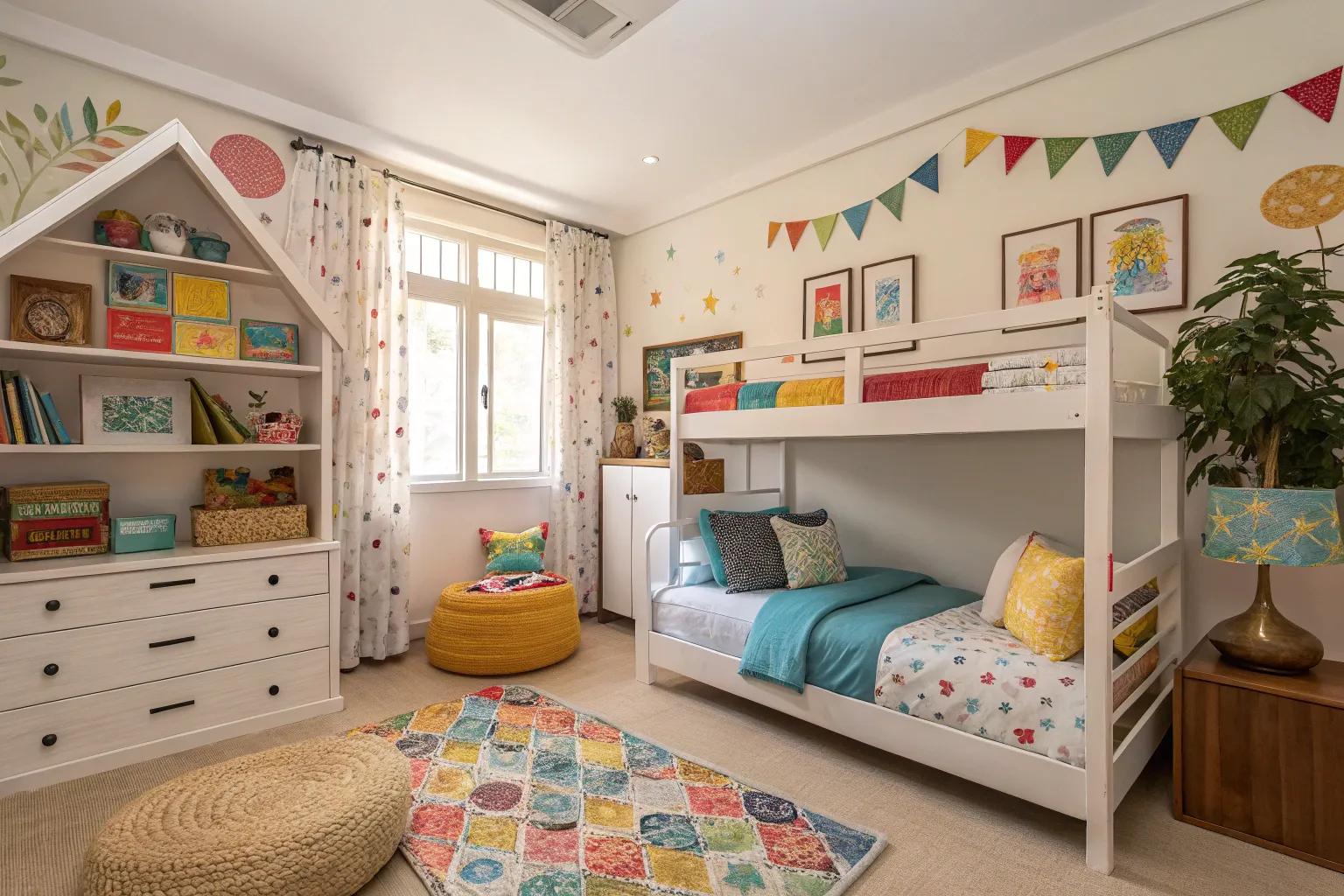
Creating the perfect kids’ bedroom is like designing a mini-world where creativity meets comfort. With clever layouts and thoughtful touches, we can craft a space that’s both delightful and practical for your little ones.
1. Design a Room for Growth

Plan the room with growth in mind, using adaptable decor and scalable furniture. This strategic approach ensures that the space remains functional and appealing as your child matures.
2. Incorporate Ample Storage Solutions

Opt for creative storage solutions like under-bed drawers and wall-mounted shelves to keep the room tidy. These practical elements are a staple in my designs, ensuring everything has its place. Explore our top storage solutions for your bedroom to maximize your space.
3. Opt for Flexible Lighting Options

Use a mix of lighting, including ceiling lights, lamps, and fairy lights, to create a cozy ambiance. In my designs, flexible lighting allows for different moods, from bright playtime to calm bedtime. You can explore creative ways to use fairy lights to enhance your space.
4. Create a Colorful Feature Wall

A feature wall with vibrant colors or playful wallpaper can instantly transform a room. I’ve seen how a bold wall can become the focal point, adding character and energy without overwhelming the space. You can explore various bold wall accent painting techniques to achieve this look.
5. Maximize Floor Space with Loft Beds

Loft beds are a fantastic way to utilize vertical space, freeing up the floor for play or study. I’ve found them to be a game-changer in small rooms, offering ample space for both storage and fun activities underneath. These pieces are essential when planning the best layouts for small rooms.
6. Include a Safe Play Area

Designate a safe play area with soft flooring and sturdy toys, ensuring peace of mind. Safety is paramount in my designs, where play areas are both secure and stimulating.
7. Utilize Multi-Functional Furniture

Choose furniture that serves multiple purposes, like a bed with built-in storage or a bench with hidden compartments. These pieces are staples in my designs, providing practicality without sacrificing style.
8. Use Bunk Beds for Shared Rooms

Bunk beds are a classic solution for shared bedrooms, providing each child with their own space without taking up too much room. I often recommend adding personal touches like individual bedside lamps and shelves for each bunk. You can also explore unique ways to utilize the area under bunk beds to maximize your floor space.
9. Use Rugs for Comfort and Style

A soft rug not only adds warmth but also defines different zones within the room. I love using rugs with playful patterns to enhance the decor and provide a comfy spot for playtime. These elements are essential when exploring creative bedroom decor themes to transform your space.
10. Choose Gender-Neutral Designs

Opt for gender-neutral designs with versatile colors and patterns that can evolve with your child. This approach ensures longevity in my projects, making the space adaptable for years to come. You can incorporate these themes by using creative bedroom shelving to display toys and books.
11. Add Personal Touches with DIY Decor

Incorporate DIY decor like painted frames or custom wall art to make the room uniquely theirs. Personal touches are what I enjoy most in designs, as they reflect the child’s personality and creativity.
12. Feature an Accent Ceiling

An accent ceiling with bold colors or patterns can make a striking statement. I’ve seen how this unexpected design choice captivates and delights, adding a unique touch to the room.
13. Choose Convertible Furniture

Invest in convertible furniture that grows with your child, like a crib that turns into a toddler bed. From my projects, these pieces prove to be economical and sustainable choices for evolving needs.
14. Incorporate Interactive Wall Elements

Add chalkboard paint or magnetic walls for interactive play and creativity. I’ve found these elements to be fantastic for encouraging expression and learning in a fun way. For more ideas, explore our modern kids room design tips.
15. Incorporate a Multi-Use Play Table

A play table can double as a craft area and a desk, making it a versatile addition to any kid’s room. I’ve seen this work wonders for both playtime and study, supporting creativity and learning in one spot. Explore our fun and functional table solutions to find the perfect fit for your space.
16. Design with a Themed Decor

Choose a theme that reflects your child’s interests, like outer space or the wild jungle, to make their room feel personal and exciting. In my experience, themed decor can be easily updated as their tastes change.
17. Add a Secret Hideaway

Incorporate a secret hideaway like a small tent or tepee for imaginative play. These charming spots have always been a hit in my designs, offering kids a private little world within their room.
18. Install Wall-Mounted Desks

A wall-mounted desk saves space and provides a dedicated area for study and creativity. I love how these desks offer a clean, modern look while being highly functional. They pair perfectly with modern wall-mounted TV designs to create a cohesive aesthetic in your home office.
19. Create a Cozy Reading Nook

Transform a quiet corner into a reading nook with soft cushions and a mini-bookshelf. When I design these nooks, I always include a soft rug and fairy lights to make it a magical escape for kids. If you are looking for inspiration for your own space, explore these stylish reading nooks for grown-ups.