
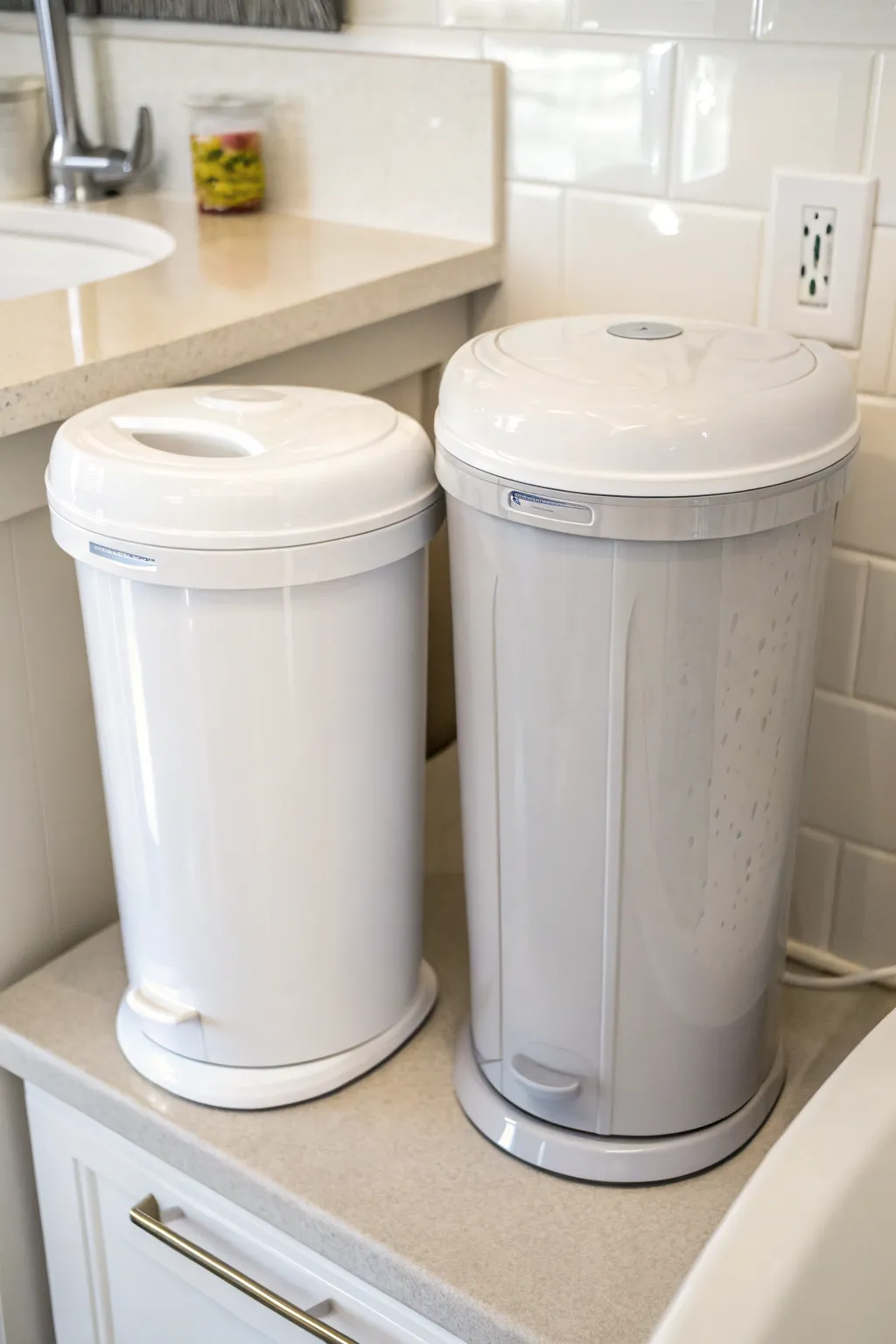
Discovering the ideal diaper disposal unit can revolutionize how parents manage dirty diapers effortlessly and stylishly. Let’s delve into a variety of imaginative and useful ideas that will blend beautifully with your home’s decor.
Reusing Common Household Items

Sometimes, the best bin isn’t even a bin at all. Think about reusing household items such as old laundry baskets or storage containers. I once used a wine crate with a waterproof bag, which brought a rustic touch to the nursery. You can find more creative storage ideas for an organized nursery to help keep your space tidy.
Safety Features for Children

Safety features are crucial if you have inquisitive kids. Choose receptacles with locking tops to prevent accidental spills. When my twins started exploring, these features became essential.
New Odor-Blocking Designs

Check out receptacles with modern odor-blocking designs like double lids or trap doors. These can be a game-changer for keeping the nursery smelling fresh. I’ve been amazed by how well these features work. For more inspiration, explore our creative nook nursery ideas.
Using Washable Bin Liners

Washable liners are an excellent way to keep your diaper bin clean and fresh. These liners can be easily cleaned with your diapers. I like to keep two on hand, so there’s always a clean one ready.
Multi-Purpose Receptacles

Choose a multi-purpose receptacle that can be used as a standard trash can once diaper days are over. This adaptability is both cost-effective and practical. I’ve found buying such a flexible item is a smart, long-term decision.
Integrating with the Room’s Style

Your diaper receptacle doesn’t have to stand out. Choose a design that blends with your style. At my home, a neutral-colored receptacle with a simple shape blends seamlessly into the room’s feel. You can even coordinate your decor with unique pumpkin cake diaper ideas for a festive seasonal touch.
Handmade Diaper Bin Creations

Crafty parents can find joy and utility in making a DIY diaper bin. By starting with a simple trash can and a water-resistant liner, you can develop a unique solution. I once used a touch-top waste bin and added a lavender-infused fabric, and the results were amazing! If you enjoy these projects, check out our fun and fresh onesie decor ideas for more nursery inspiration.
Using Fragrance Oils for Cleanliness

Putting a few drops of fragrance oils on a cloth or cotton ball inside the bin can greatly help with odor. Options like lavender and tea tree are popular, but ensure they are safe for pets. I’ve discovered this to be a simple yet effective method for keeping the air fresh.
Elegant Bamboo Receptacles

For an eco-aware choice, consider a bamboo receptacle for your cloth diapers. Bamboo has natural antibacterial traits and adds a warm feel to any area. I appreciate its sustainability and how it blends seamlessly into my home. These items are also featured in our guide to the best diaper gifts for baby showers.
Cutting-Edge Odor Management

Good odor management is essential, and certain bins feature built-in carbon filters or double-sealed lids. In my experience, using a bin with a carbon filter significantly improved the room’s freshness.
Water Immersion Method

The water immersion method involves soaking diapers in a container with water, often mixed with baking soda or essential oils. Though not for everyone, it can effectively remove stains. I found it most helpful for diapers needing special care. If you are preparing for a new arrival, check out these simple baby shower plans to save time.
The Traditional Unscented Canister

The unscented canister technique has long been a favorite among parents. Simply place your used diapers in a waterproof bag inside a container with a lid. From my own experiences, using a flip-top lid helps promote air flow, which surprisingly minimizes bad smells.
Small-Scale Bin Designs for Confined Spaces

Living in a compact home doesn’t mean sacrificing practicality. Reduced-size diaper bins are perfect for areas with limited space. In my small apartment, a slim bin beside the changing table was incredibly helpful. You can apply similar space-saving strategies when designing a pool table room in a confined area.
Vibrant Bin Choices

Inject your nursery with a bit of personality by choosing a colorful diaper bin. Bright shades can turn the bin into a playful focal point. I picked a mint green bin that matched my daughter’s nursery perfectly.
Chic Contemporary Containers

For those who appreciate modern sophistication, elegant diaper containers made of stainless steel or vivid plastics can enhance your nursery. These containers often have creative odor-blocking designs. I’m particularly fond of how easily they merge into any contemporary setting, which is a key element of modern neutral nursery design.
Combined Holding Methods

Consider a mix of wet and dry storage by using a dry bin for covers and a wet bin for inserts. I found this especially useful for organizing diaper types and keeping them separated. You can also explore creative storage ideas using hanging systems to maximize your available space.