
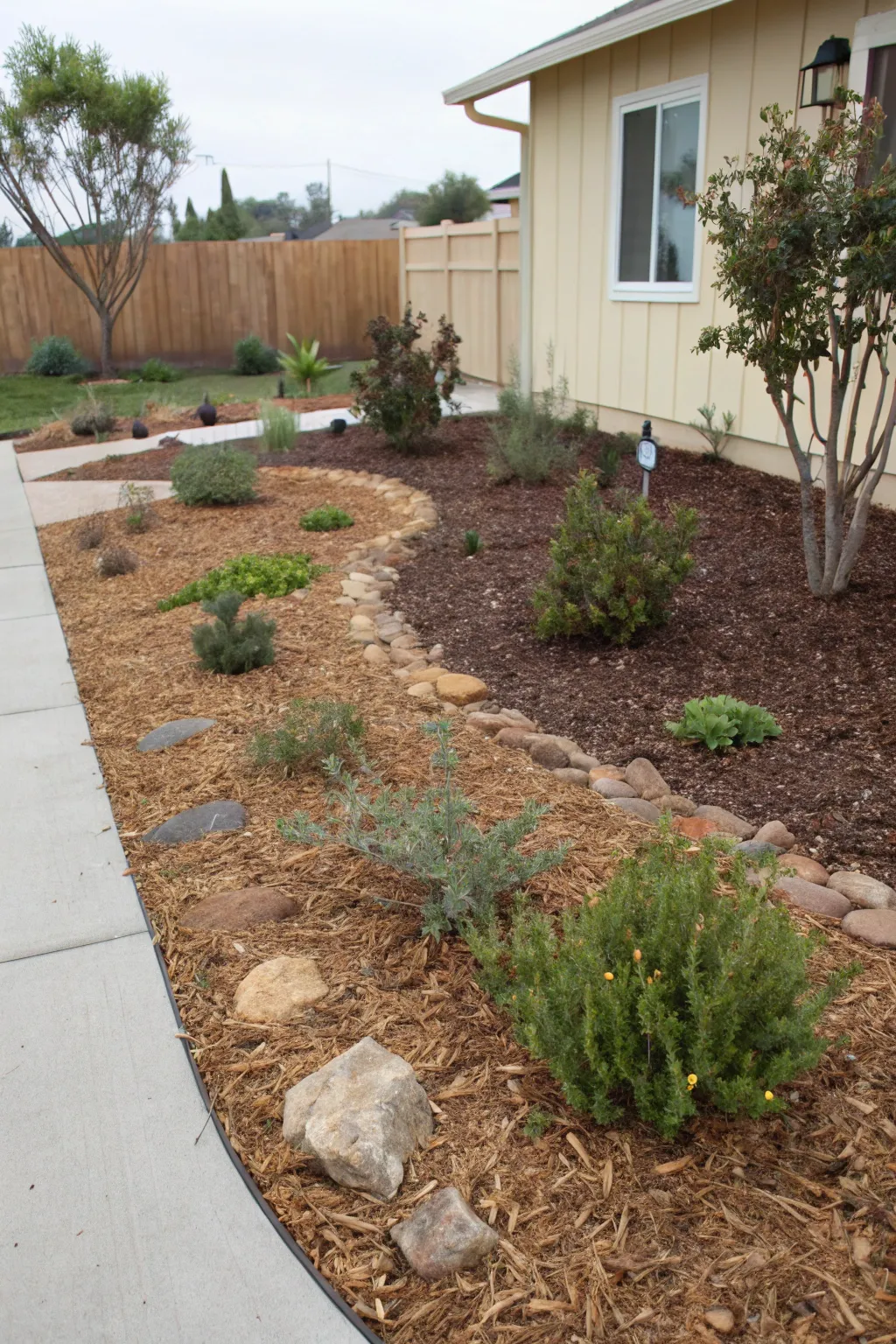
Transforming your front yard into a water-wise landscape is like crafting a vibrant artwork that thrives in harmony with its environment. Prioritizing both water conservation and striking aesthetics, these suggestions will convert your yard into a resilient retreat.
Desert Flora and Succulents

Adding cacti and succulents provides your yard with a dramatic, sculptural appeal while significantly reducing water consumption. I truly appreciate how these plants bring in texture and intrigue, creating a charming desert-like atmosphere. You can explore stunning xeriscape yard ideas to further enhance your landscape design.
Uncommon Climbing Gardens

Add a surprise element with vertical gardens that make use of wall space for planting, ideal for compact yards. These gardens emphasize the vertical dimension and introduce a unique centerpiece. You can further enhance your space by incorporating creative fountain ideas designed for smaller footprints.
Imaginative Use of Seasonal Flowers

Play with annuals for seasonal shifts in color that revitalize your garden’s appearance each year. This technique keeps things new and exciting, presenting a fresh palette annually. You can also consider expert xeriscaping to create a sustainable foundation for these seasonal displays.
Water Accents

Incorporate subtle water features such as dry streambeds or ornamental pots for a hint of calm. These additions can bring a soothing quality to your yard without overusing water. Explore our water features with an unusual twist to find unique inspiration for your landscape.
Simple Design

Adopt minimalism by paring down plant varieties and emphasizing sleek lines and open expanses. This strategy results in a tranquil, uncluttered yard that feels spacious and calm.
Succulents in Vessels

Placing succulents in pots provides design versatility and simple upkeep. I view this method as excellent for bringing in height and structure to any segment of the yard. You can incorporate these containers into your effortless front landscaping to achieve a fresh look.
Useful and Pretty Harmony

Ensure an equilibrium between usefulness and attractiveness by conceiving areas that are both gorgeous and efficient. For my designs, I always aim for a synergy that satisfies both the eye and the environment. You can explore our eye-catching yard landscaping ideas to find inspiration for your own outdoor space.
Hue Play

Merge greens with bright purples, blues, or yellows to achieve striking color play. I love playing around with different shades to ensure the landscape is lively and visually appealing. Explore these creative front yard designs to elevate your outdoor space.
Trails and Walkways

Map out pathways utilizing stones or pavers that integrate seamlessly with your xeriscape aesthetic. These trails foster movement and guide visitors across the garden, enriching their overall journey. Explore our front yard gravel inspiration to find the perfect materials for your landscape.
Decorative Trees and Bushes

Introduce drought-resistant trees and shrubs for added height and structure, giving your landscape design layers. It makes for focal points and depth, similar to a thoughtfully composed artwork. You can learn more by exploring different styles in landscape design.
Minimal-Upkeep Rockeries

Form rock gardens using boulders and gravel to lower maintenance needs and incorporate rugged beauty. I find that rock gardens complement the natural landscape and create a striking visual contrast. Explore our outdoor rock garden design inspiration to help plan your layout.
Indigenous and Low-Water Flora

Choosing native plants guarantees your garden flourishes with very little water, as they’re naturally suited to the local climate. This selection streamlines upkeep and benefits the local ecosystem.
Porous Walkways

Employ permeable materials for walkways to improve water permeation and reduce surface runoff. This approach aids in sustaining a healthy environment in your xeriscape, combining aesthetics with functionality.
Gravel and Stone Paths

Construct gravel and stone walkways to naturally direct the gaze and foot traffic throughout your garden, enhancing both utility and visual appeal. It’s one of my preferred ways to delineate spaces while ensuring minimal maintenance. These features are a key element of stylish desert landscaping for your front yard.
Mediterranean Aromas

Plant Mediterranean herbs like lavender and rosemary to impart delightful fragrances to your garden. These plants not only offer amazing scents but also flourish with little water.
Mulch and Ground Covering

Using mulch helps maintain the right soil moisture levels and keeps weeds down, all while enriching the visual depth of your landscape. I often choose organic mulch for its authentic look and added benefits for the soil. You can also explore modern front yard looks using black mulch to create a striking contrast.