
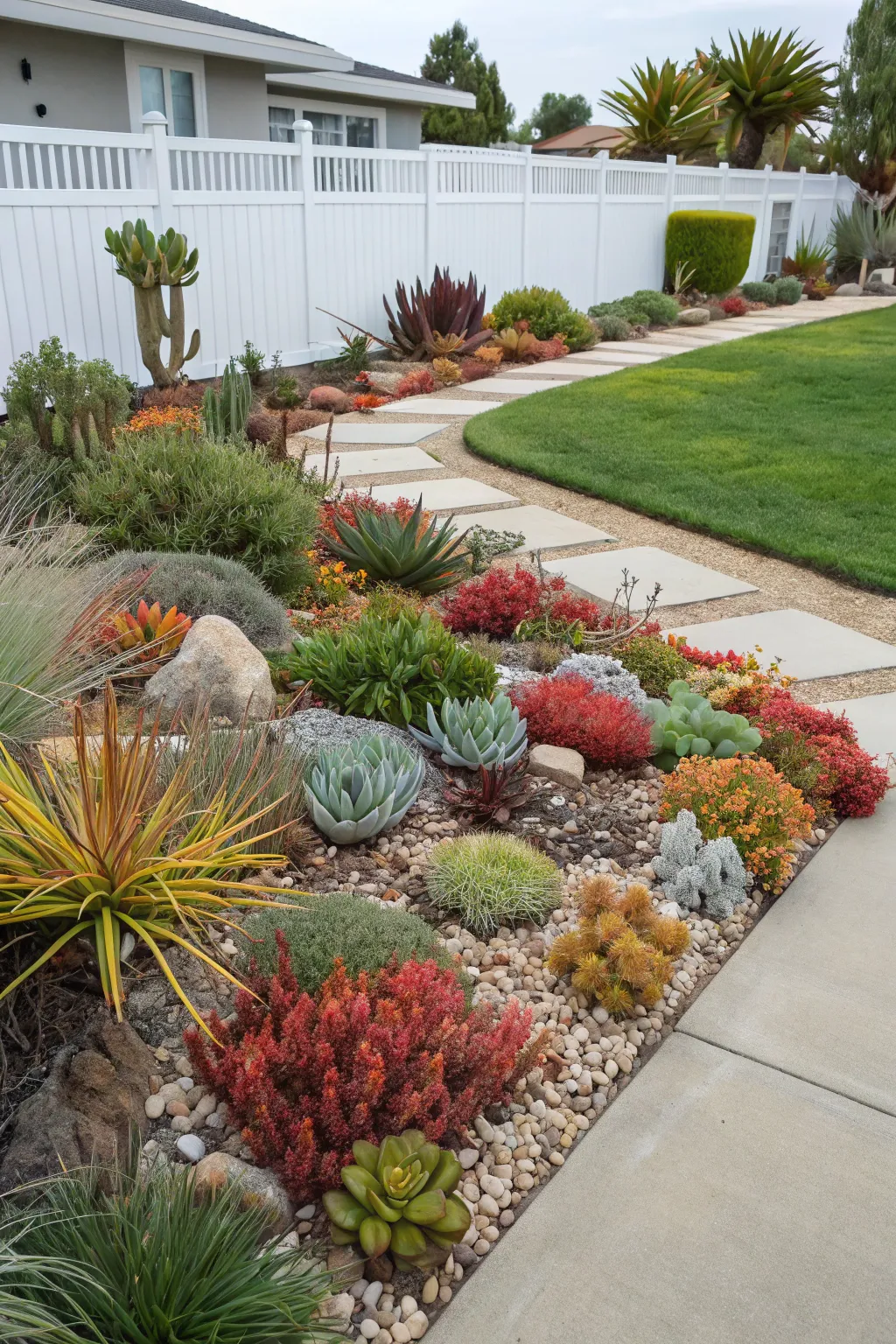
Creating a stunning front yard doesn’t have to involve endless hours of maintenance or gallons of water. With xeriscaping, you can achieve a beautiful, sustainable landscape that thrives in dry climates.
Implement Low-Water Lawn Alternatives

Replacing grass with drought-tolerant ground covers can drastically cut down on water use. I love the lush feel these alternatives provide without the upkeep. You can explore modern xeriscape front yard designs to find the perfect aesthetic for your home.
Play with Diverse Textures and Colors

Mixing different textures and colors with various plants and materials keeps the landscape dynamic. This approach never fails to surprise visitors in my designs. You can learn more about these techniques by transforming your front yard with expert xeriscaping.
Embrace Rock and Gravel Landscaping

Forget traditional lawns; gravel and rocks are your new best friends for a xeriscape design. I personally love how they add texture and require zero watering.
Introduce Water Features Sparingly

A small, well-placed water feature can add a touch of tranquility to your xeriscape. It’s a feature that often surprises and delights visitors.
Create a Central Focal Point

A striking focal point like a large boulder or unique tree can anchor your design beautifully. It’s a surefire way to make a statement without ongoing effort. You can explore more easy front yard ideas to further enhance your home’s curb appeal.
Use Containers for Flexibility

Containers allow you to move plants around, adapting to seasonal changes or your mood. In my experience, they are perfect for adding versatility to any landscape. You can explore the best plants for your pool perimeter to see which varieties thrive in pots.
Incorporate Perennial Pollinator Plants

Planting perennials like coneflowers attracts pollinators and adds seasonal beauty. I love watching the garden come alive with bees and butterflies in these spaces. Choosing the right flower types for your home entrance ensures a welcoming display all season long.
Introduce Vertical Elements

Incorporating vertical elements like trellises or tall plants adds dimension and interest. It’s a trick I often use to elevate a design without adding clutter. You can also pair these structures with front yard gravel to create a clean and modern aesthetic.
Opt for Minimalist Design

A minimalist approach focuses on clean lines and open spaces, which I find creates a calming atmosphere. This style is perfect for anyone looking to reduce upkeep. Explore our minimalist yard ideas to achieve a sleek outdoor look.
Go Native with Drought-Tolerant Plants

Incorporating native plants like agaves and yuccas is a brilliant way to keep your yard thriving with minimal water. I’ve seen how these hardy beauties can transform a space while being eco-friendly.
Incorporate Eco-Friendly Materials

Using eco-friendly materials like recycled stone or wood ensures sustainability. I’ve found that these materials often bring a unique charm to the space. You can explore more creative eco-friendly ideas to enhance every room in your home.
Design Inviting Pathways

Creating pathways with stone or pavers not only adds structure but also invites exploration. In my designs, these paths often double as rainwater collectors.
Build a Rain Garden

A rain garden is perfect for managing stormwater and supporting moisture-loving plants. It’s a smart solution I’ve seen thrive in many landscapes. If you want to combine water management with seclusion, check out these smart ways to add privacy to your front yard.
Utilize Mulch for Moisture Retention

Applying mulch is like giving your plants a cozy blanket to keep moisture in and weeds out. My clients appreciate the simplicity and effectiveness of this technique. It is a staple in many small yard makeovers.
Install a Drip Irrigation System

By using drip irrigation, you can water plants directly at the roots, saving water and time. It’s a game-changer for many of my clients in dry climates. Check out these inspired landscaping ideas for more ways to manage water efficiently.
Add Ambiance with Lighting

Strategically placed lighting can transform your yard into a magical space at night. I often recommend solar garden lighting for both ambiance and energy efficiency.
Maximize Space with Tiered Planting

Creating tiered planting areas can maximize space and add visual intrigue. I’ve used this technique to create layers of interest in smaller yards. You can apply similar principles to your workspace by exploring creative desk layout ideas.
Add Decorative Elements

Incorporating decorative rocks or sculptures can elevate your yard’s visual interest without adding to your chore list. I always say, let art do the talking in your garden.
Define Spaces with Edging and Borders

Using materials like metal or wood for borders helps keep pathways and plant areas tidy. I find this detailing can make a yard look professionally finished.
Experiment with Unusual Plant Combinations

Combining unexpected plants can create a unique yard that stands out. In my projects, these combinations often lead to delightful and surprising results.