
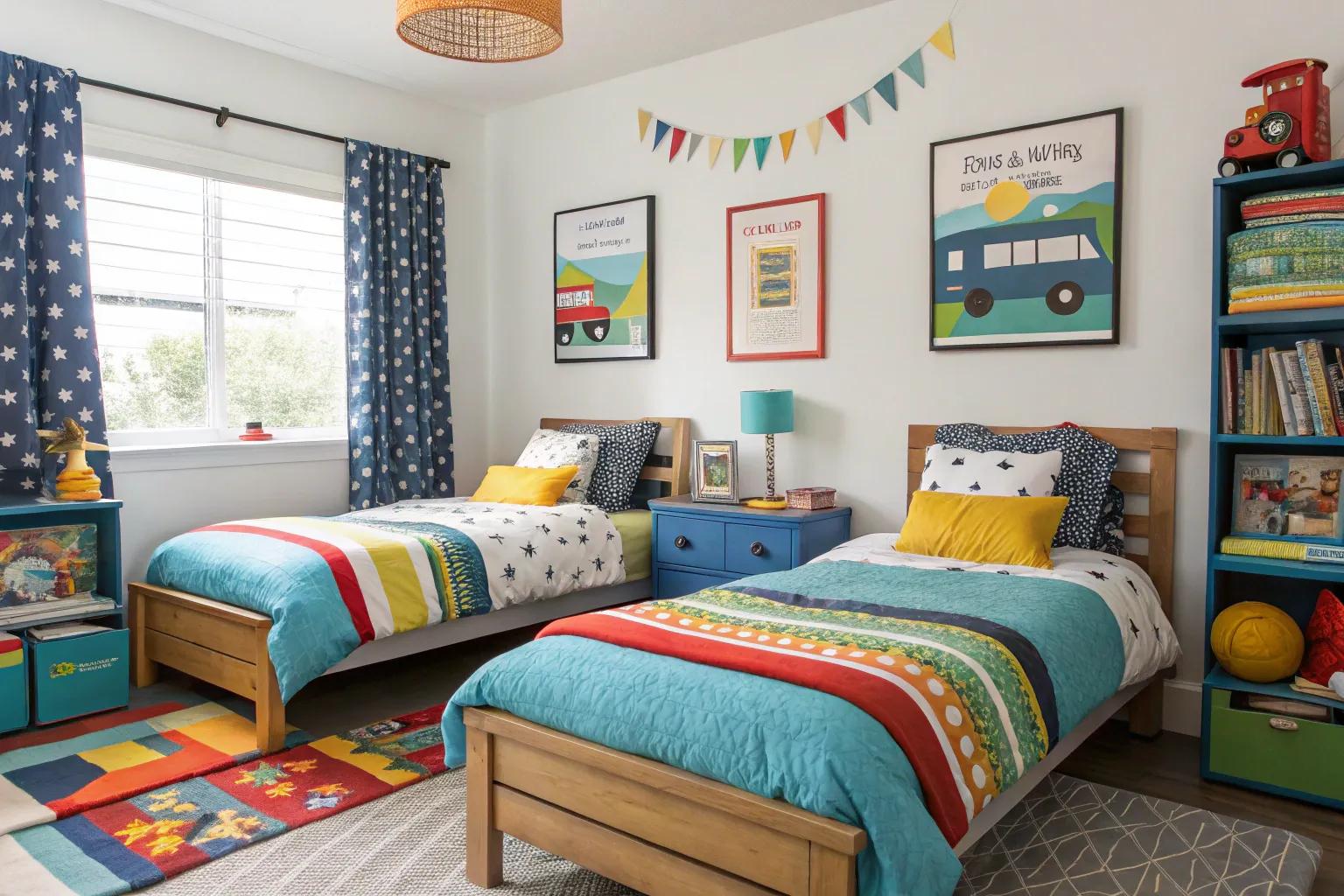
Designing a shared bedroom for boys can be both a fun and challenging task. With a bit of creativity, you can craft a space that reflects their personalities and functions beautifully.
1. Coordinated Color Scheme

Choose a color palette that provides a cohesive look without sacrificing individuality. My favorite combination is navy and gray, which offers versatility and a touch of sophistication.
2. Personalized Zones

Create distinct areas for each child to express their individual style. I love using custom name decals above each bed for a personal touch. You can find more inspiration in our stylish boys’ bunk room ideas.
3. Symmetrical Design

Consider a symmetrical layout for an organized look. I often position beds and decor elements symmetrically to foster a sense of balance and harmony.
4. Playful Bedding

Opt for bedding that is both fun and functional, like reversible comforters. This allows for easy refreshes and keeps the room feeling lively. You can find more inspiration in our guide to fun and functional twin boy bedrooms.
5. Shared Nightstand

A shared nightstand between beds can save space while offering a spot for essentials. I love adding a fun lamp and a few favorite books for easy access. This setup is one of the most stylish ways to arrange two beds in a shared adult bedroom.
6. Playful Wall Art

Add personality with wall art that reflects their interests. I once used a mix of framed posters and decals to create a dynamic and inspiring wall.
7. Bunk Beds for Space Efficiency

Bunk beds are a classic choice for maximizing floor space. I once designed a room where the bunk beds doubled as a play area, adding layers of functionality. You can also explore modern bunk beds that accommodate queen mattresses to increase sleeping capacity without sacrificing style.
8. DIY Art Display

Create a DIY art corner where kids can display their creations. I’ve found that a simple corkboard or wire grid works wonders for showcasing their masterpieces.
9. Interactive Play Space

Designate an interactive play space with a small play tent or a reading nook. I’ve seen how these cozy corners can become a cherished retreat for imaginative play.
10. Dynamic Flooring

Use dynamic flooring like rugs with geometric patterns to add visual interest. These can also help define different zones within your gaming bedroom design.
11. Creative Study Areas

Incorporate a small desk or a study nook for homework and creativity. I once designed a nook under a loft bed that became a favorite spot for reading and drawing.
12. Lighting for Ambiance

Incorporate varied lighting fixtures to create ambiance. I find that combining task lighting with ambient sources makes the room versatile for different activities.
13. Incorporate Nature

Bring a touch of nature inside with plants or nature-themed decor. I’ve used simple potted plants and nature prints to breathe life into the room. For a seasonal twist, you can also explore pumpkin-themed decor to add warmth to your space.