
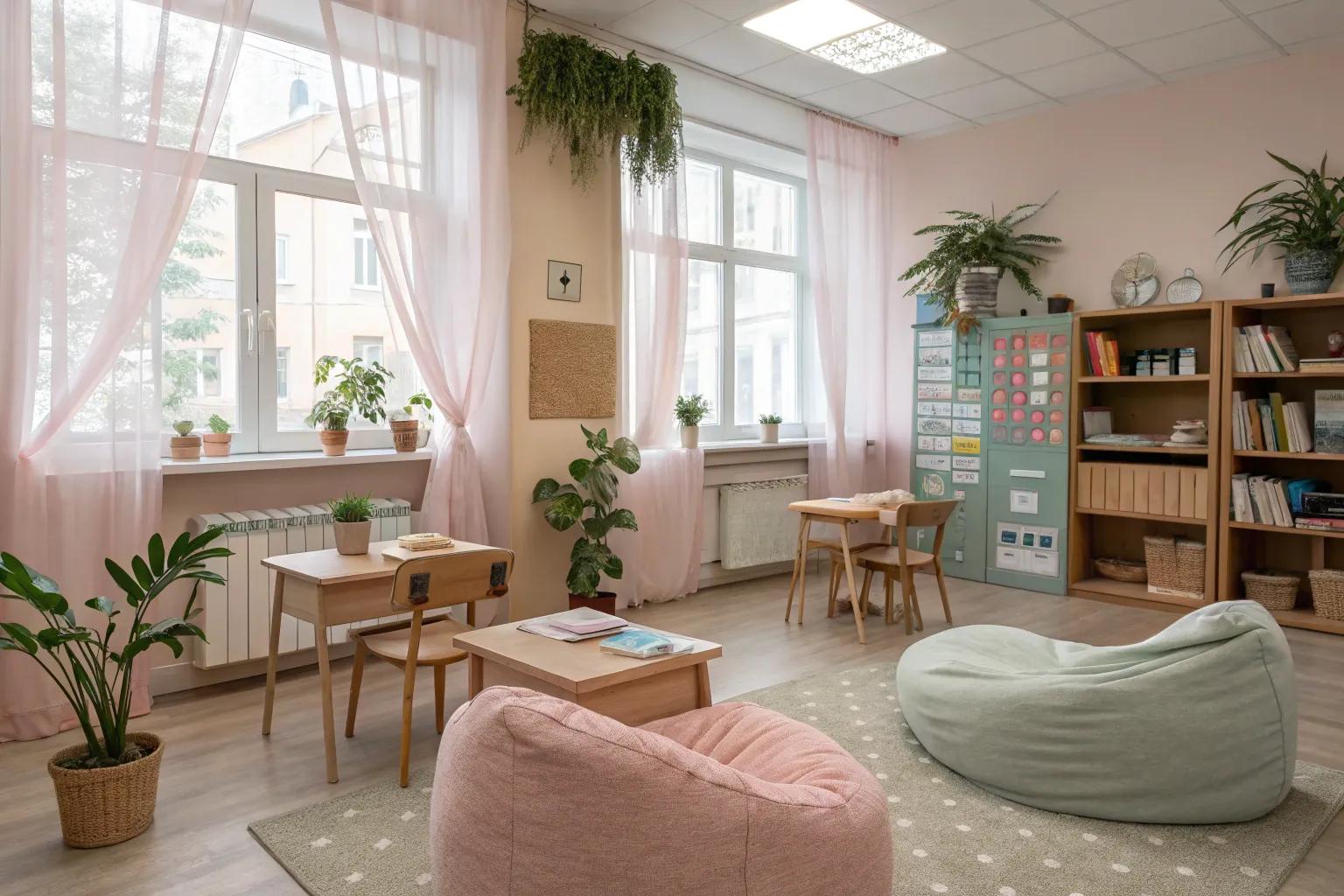
In the hustle and bustle of school life, creating a calm classroom can be a game-changer. It not only helps students focus but also fosters a sense of safety and tranquility.
1. Create Cozy Seating Arrangements

Incorporate cozy seating like beanbags or cushions to make the space inviting. I’ve found that students are more relaxed and engaged when they have comfortable seating options.
2. Create a Nature Wall

A nature-themed wall can bring the outdoors in and provide a visual escape. Use murals or posters of forests, oceans, or gardens to inspire and calm.
3. Designate Mindfulness Spaces

Create areas dedicated to mindfulness activities like reading or meditation. These spaces can serve as a retreat for students needing a moment of peace. You can incorporate unique decor ideas to make these zones more inviting.
4. Introduce Calming Accessories

Add elements like canopies or teepees for personal space and calm. These accessories create intimate zones where students can retreat when they need a break. Incorporating these features is a key part of our smart classroom layout ideas for fostering focused learning.
5. Design a Zen Garden

A small desktop Zen garden can provide a moment of mindfulness. Students can take turns arranging the sand and stones, offering a peaceful break in their day. If you prefer a more vibrant atmosphere, explore our exciting beach-themed classroom designs for alternative inspiration.
6. Facilitate Open Communication

Encourage open communication to build trust and reduce anxiety. I always make sure students know they can express their thoughts and feelings openly in our classroom. You can even spark these conversations while decorating with our festive classroom Christmas tree ideas.
7. Implement Soft Lighting

Using soft lighting can create a warm and inviting classroom ambiance. Adjustable lamps or fairy lights can add a gentle glow that is less harsh than typical fluorescent lights. You can apply these same principles to create a warm and inviting cinema room at home.
8. Embrace Soft, Neutral Colors

Choosing soft, neutral colors for your classroom can transform the space into a peaceful haven. In my experience, using shades like pale blue, soft beige, or gentle greens calms the mind and sets a serene tone. You can find more inspiration for this aesthetic in our beach-themed classroom ideas.
9. Welcome with Positive Affirmations

Incorporating positive affirmations on the walls can uplift and encourage students. I’ve seen firsthand how these messages foster a supportive and inclusive environment. You can find more inspiring decor ideas for 3rd grade to help create this space.
10. Organize with Intention

A clutter-free space is crucial for a calm classroom. I advocate for using shelves and bins to keep materials organized and out of sight, reducing visual distractions.
11. Incorporate Sensory Tools

Offering sensory tools like stress balls or fidget spinners can help students manage anxiety and stay focused. I’ve noticed these tools are particularly helpful for students needing tactile engagement.
12. Enhance with Calming Sounds

Playing soft, calming music can help maintain a tranquil atmosphere. I often use nature sounds or gentle instrumental music to create a soothing background.
13. Integrate Art Therapy Spaces

Set up a small area for art therapy, where students can express themselves creatively. This is a fantastic way to channel emotions constructively. You can learn more about how to set up a homeschool room in a small area to make this possible.
14. Incorporate Natural Elements

Bringing in natural elements like plants can significantly enhance the calming atmosphere. In my designs, I always include greenery to connect students with nature, improving their mood and concentration. You can also explore these simple fall classroom door ideas to bring seasonal nature indoors.
15. Utilize Flexible Seating

Flexible seating options allow students to choose how and where they are most comfortable learning. This approach can increase focus and reduce restlessness. You can explore innovative desk ideas to further support these dynamic learning environments.
16. Use Aromatherapy

A subtle touch of aromatherapy can have calming effects. Consider using essential oils in a diffuser to create a soothing scent in the classroom. You can also incorporate these refreshing bedroom spa ideas to extend that sense of relaxation into your home.
17. Establish Clear Routines

Consistent routines provide a sense of security and predictability. I always ensure my classroom has a clear schedule to help students feel more at ease. You can also incorporate creative classroom boards to visually reinforce these daily expectations.