
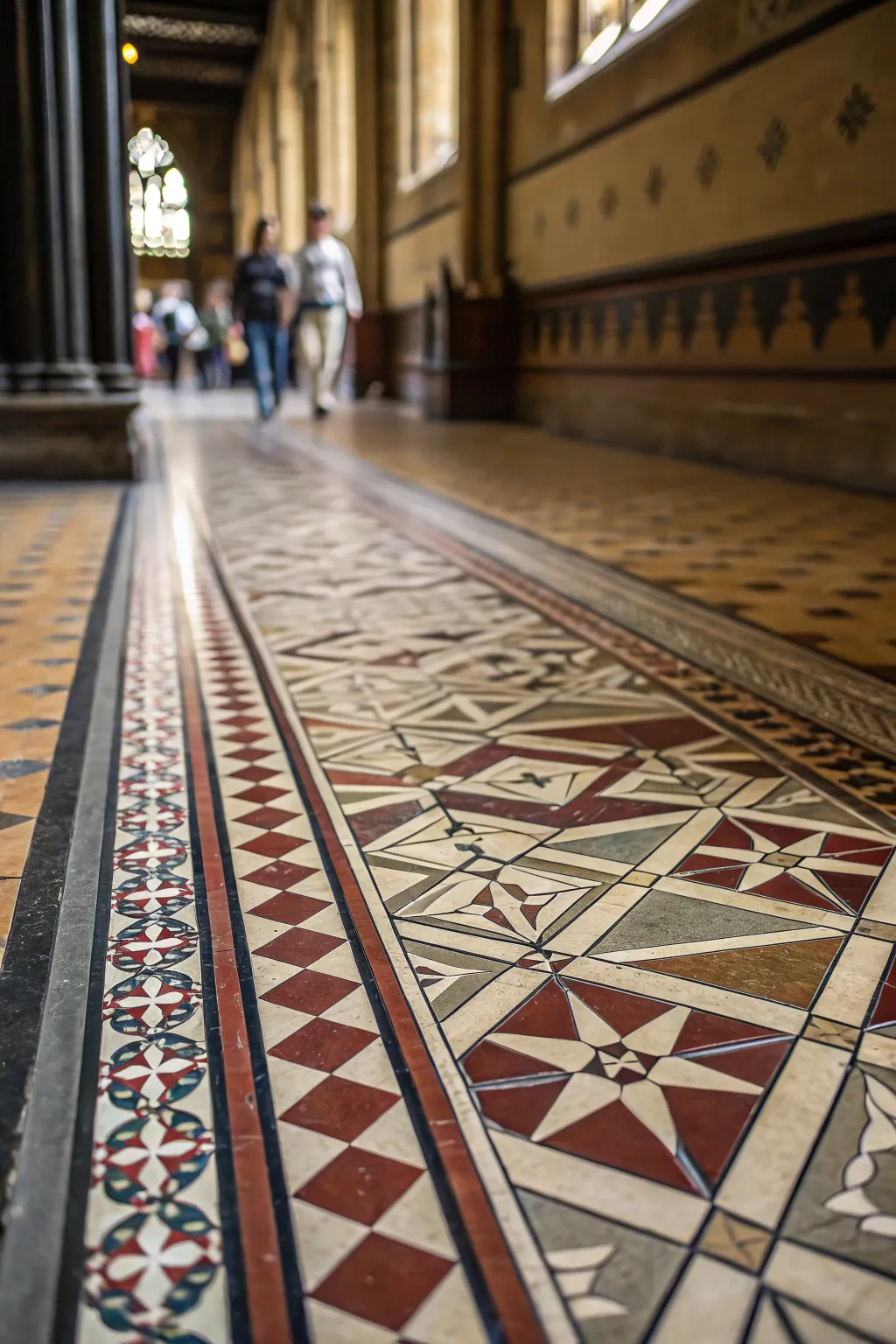
Moving from one type of tile to another can be an exciting opportunity to enhance your design. Let’s dive into some inventive methods to make these transitions functional and visually appealing.
Consistent Rock Design

Merge various natural rocks to produce a luxurious and harmonious transition. I often employ this technique to impart an earthy, grounded ambiance to interiors. Explore our creative floor transition designs to elevate your space.
Boundary Transitions

A boundary can act as a distinct and elegant separation between various tile designs. I’ve discovered that employing a strip of contrasting material can elegantly denote the transition. You can explore contemporary tile designs to find the perfect materials for your space.
Angled Style

A diagonal transition can infuse energy and a unique visual charm into a space. I’ve implemented diagonal lines in larger spaces to fashion a bold and captivating layout. You can see how this approach works in our stunning dark kitchen backsplash ideas.
Harmonious Color

Selecting tiles in harmonizing colors can render the transition almost imperceptible, delivering a seamless visual experience. In my designs, I frequently choose hues within the same spectrum to maintain balance.
Fluid Curves

Incorporating a curved transition between tiles softens the demarcation and introduces elegance. I utilize curves to evoke a feeling of motion and fluidity within spaces. Explore smart ways to transition between tile floors to achieve a seamless look.
Varied Texture

Combining different textures introduces intrigue and richness to your flooring transitions. I personally enjoy pairing a rugged stone with a refined ceramic tile to stimulate the sense of touch. You can explore our transitional tile ideas to find more ways to blend these materials effectively.
Fading Color

Implement a fade of color to transition softly between tiles. This technique generates a sense of movement and is ideal for a subtle design statement. You should also consider effective height transitions when moving between different flooring materials.
Consistent Design

Sustain cohesion between rooms by implementing similar tile designs with slight variations. This strategy helps preserve the overall harmony of a home. Explore our creative mudroom tile designs to elevate your entryway.
Personalized Art

Design a personalized tile art to transform your transition into a true focal point. It’s an exquisite means of showcasing individual style and artistry. You can also explore creative canvas art ideas to further elevate your walls.
Metal Accents

Integrate metal trims for a polished and modern transition. I’ve observed metallic components working wonders in contemporary spaces, contributing a hint of shimmer. Explore our contemporary trim details to achieve a sleek look.
Tiny Tile Art

Employing mosaic tiles as a transition can inject vibrancy and color. I frequently recommend mosaics to clients aiming to make a striking impact.
Precise Channeling

A T-Channel can deliver a precise and neat transition for modern spaces. It’s a practical choice that I advocate for guaranteeing flawless alignment. These clean lines pair perfectly with creative green couch designs to elevate your interior aesthetic.
Freeform Design

Create freeform designs where tiles converge to mimic natural landscapes. This strategy can contribute a calming, natural atmosphere to any room.
Hexagon Sophistication

Hexagonal tiles can form an impressive and unique transition that is both noticeable and stylish. In my projects, I’ve utilized hexagons to merge spaces, providing a smooth flow reminiscent of natural forms. You can explore more stunning hexagon wall designs to elevate your home interior.
Defined Borders

Establish a border using accent tiles to define a transition. This method is a personal favorite for lending structure and sophistication to open areas. You can explore these tiled porch ideas to find the perfect pattern for your home.
Shapes and Lines

Introducing geometric patterns can define transitions with a modern edge. I appreciate using designs like chevrons or herringbones to direct the eye from one area to another.