
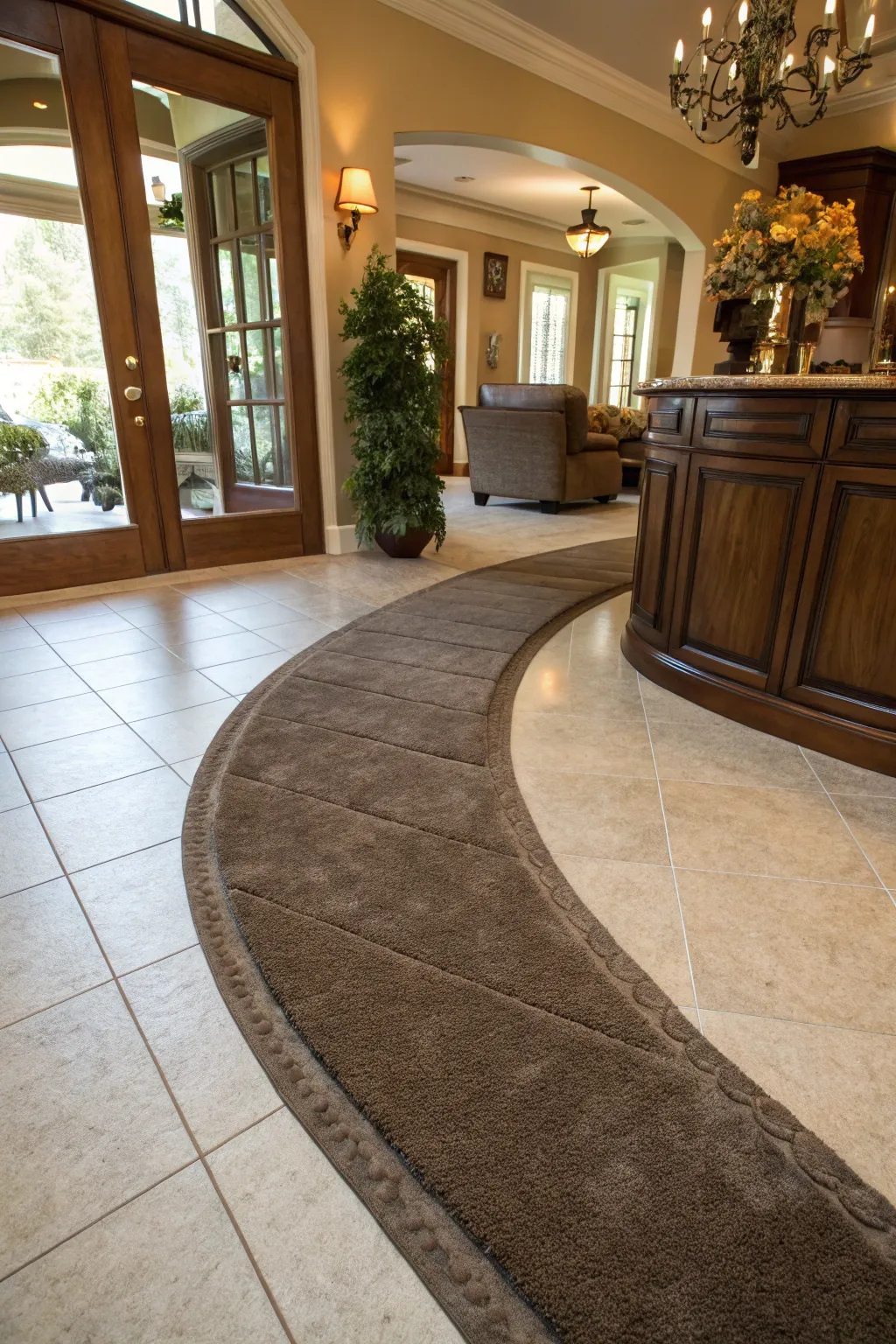
Moving from carpet to tile flooring can pose unique design dilemmas, especially when the floor levels don’t match up. Let’s explore some inventive ways to blend these surfaces, ensuring your transitions are both practical and visually pleasing.
Use Soft Transitions

Slowly blending colors or materials results in a seamless flow. It’s one of my go-to methods for keeping harmony in larger spaces. Explore our modern floor tile transition ideas to achieve this look in every room.
Select a Metal Connector Strip

Metal strips offer a modern, refined look, which is perfect for contemporary spaces. In my projects, they frequently highlight the transition beautifully.
Consider a Concealed Edge Bar

A Z-bar is my dependable option for securing carpet edges beneath tiles, providing extra reinforcement. It’s perfect for areas that see a lot of foot traffic, where durability is a must. For more design inspiration, explore these stylish transitional tile ideas to elevate your space.
Incorporate Edge Protection

Schluter trims offer a polished, professional look, ideal for a refined finish. I’ve used them to protect edges while giving spaces a modern feel. These details are essential when selecting top flooring choices for modern workspaces.
Discover Natural Tile Edge Designs

Organic shapes can help create a seamless flow between different kinds of flooring. I’ve incorporated this in open-plan areas for a unified feel.
Try the Seamless Edge Technique

The tuck-in approach is a long-standing favorite for good reason, offering a streamlined look by tucking the carpet’s edge neatly into the tile. I’ve found it particularly effective in areas where functionality and simplicity are key.
Try Dynamic Lines

Diagonal transitions add energy and action, great for dynamic spaces. I’ve watched them turn average areas into thrilling design features, especially when paired with stunning dark kitchen backsplashes.
Arrange Strategically Placed Floor Coverings

Rugs are an excellent way to connect different styles, especially with eye-catching patterns. I’ve used layered rugs to blend spaces seamlessly. You can explore more creative ways to mix flooring types to enhance your home design.
Employ Height Leveling Strips

Leveling strips work like a bridge, beautifully smoothing out the height difference between carpet and tile. I’m especially fond of using them in spaces where a subtle touch is needed.
Create Striking Shifts

Strong contrasts can create a dramatic statement, clearly defining each space. In open areas, this technique brings energy and excitement. You can further enhance this effect by incorporating creative bedroom rug designs to anchor your furniture.
Incorporate Geometric Edges

Geometric designs can bring a modern edge, turning transitions into artistic statements. I’ve used strong patterns to add visual interest to simple spaces. For more design concepts, explore our modern tile inspiration for walk-in showers.
Blend Harmonizing Hues

Complementary colors can visually tie spaces together without being matchy-matchy. This strategy brings balance and unity to varied areas.
Incorporate a Decorative Tile Edge

For an added layer of sophistication, a tile accent border can define the transition point with elegance. I find this approach works wonderfully in high-end living spaces. Explore our chic shower tile accents to elevate your bathroom design.
Add Ornate Touches

Decorative patterns can elevate the transition space, injecting a sense of personality. I love using them to add flair to transitional zones. Explore our top floor transition options to find the perfect style for your home.
Opt for Fluid Transitions

Curved transitions soften hard lines, making for a pleasing flow. These are ideal for spaces where a sense of movement and grace is key. You can explore luxury flooring ideas to further elevate the sophistication of your home.