
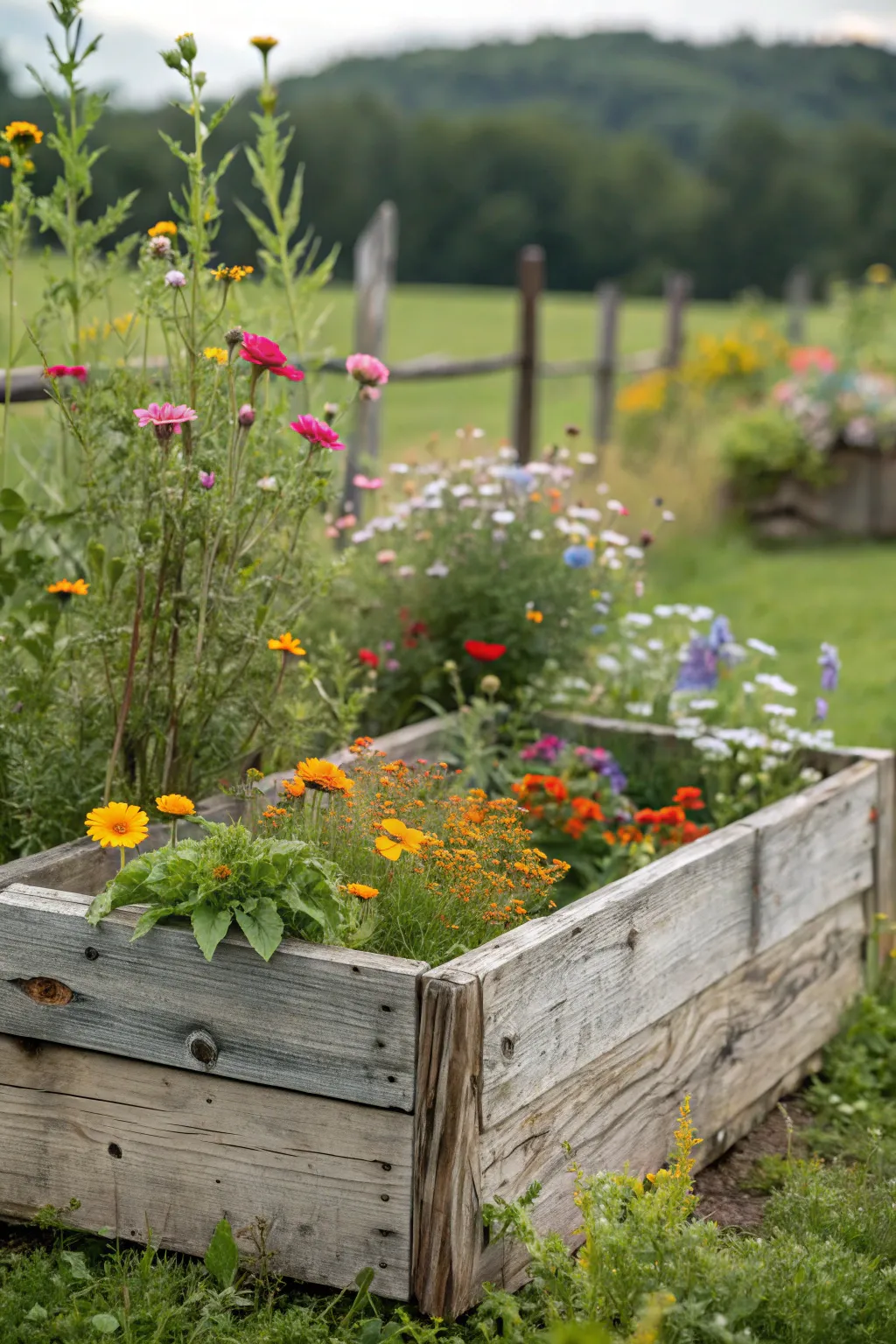
Making a wooden raised garden bed is like creating a beautiful focal point for your backyard. I’m excited to share some of my favorite concepts that will turn your outdoor area into a lush garden retreat.
Blending Stone and Timber

Incorporate stone and timber in your garden bed design for a blend of rustic charm and refined elegance. I love how the natural materials contrast yet complement each other beautifully. You can also apply these same principles when blending rustic charm with modern bathroom style.
Adaptable Arrangements

Design adaptable beds that can be easily rearranged to suit your gardening needs. This flexibility is excellent for those who enjoy frequently changing their garden’s layout. Explore these creative vegetable garden layout ideas to find the perfect configuration for your space.
Adding Trellis Features

Attach a trellis to your wooden bed to support climbing plants like peas and cucumbers. This saves valuable space and introduces a stunning vertical element to your garden. Check out our tips for building cucumber trellises to get the best results.
Pathway Blending

Connect your raised beds with pathways to create a smooth, cohesive garden flow. I’ve discovered that this makes walking through the garden easy and enjoyable. You can explore these raised flower bed ideas to find the perfect layout for your space.
Timeless Rectangular Style

A rectangular raised garden bed is a classic option that fits perfectly into any garden setting. I appreciate its simplicity in construction and the convenient access it provides from all sides. These innovative raised garden beds are also a great choice for low-cost landscaping.
Bold Decorative Colors

Paint your wooden beds with vibrant colors for a lively splash of color in your garden. I’ve used this technique to brighten my area and add a personalized touch. You can find more inspiration in our guide to creative raised flower beds.
Sleek Aesthetic Lines

For a more contemporary aesthetic, use clean, straight lines in your design. This minimalist approach brings a sense of refinement and organization to any garden.
Shelter House Systems

Affix a shelter house system to your raised bed to prolong your growing season. This has significantly improved my harvests, allowing fresh produce even in cooler months. Explore our creative wooden raised bed inspirations to find the perfect structure for your garden.
Built-In Pest Management

Incorporate pest control features like fencing or covers to protect your plants. I’ve found this particularly beneficial in keeping my vegetables safe from unwanted visitors.
Combining Wood and Metal

For a modern update, integrate wood and metal in your raised bed design. This pairing enhances durability and adds a sleek, eye-catching touch that stands out from conventional elegant bed design ideas.
Elevated Structures

Raise your garden beds to waist height for improved access and easier upkeep. I appreciate how this design protects my back while giving my garden a sophisticated look.
Multi-Level Garden Beds

For a sophisticated and useful addition, think about a tiered raised garden bed. These stepped beds allow you to cultivate a diverse range of plants while introducing dimension and elevation to your garden. You can follow our expert tips for designing beautiful flower beds to ensure your tiered structure complements the rest of your landscape.
Edible Flower Gardens

Think about dedicating a raised bed solely to edible flowers. They’re not only beautiful but also enhance the taste and presentation of your dishes. You can integrate these blooms into creative 4×8 raised bed layouts to maximize your harvest.
Small Urban Oasis Solutions

In urban environments, a compact raised garden bed can transform a small balcony into a vibrant oasis. I’ve transformed my small patio into a green getaway with just a few square feet. You can find more inspiration in our chic small patio ideas.
Corner-Fitting L-Shape Design

An L-shaped raised garden bed takes full advantage of corner spaces. I’ve used this design to effectively optimize my patio, all while keeping it stylish. If you are looking for similar space-saving layouts, check out our smart bed solutions for low ceilings.
Harmonious Natural Settings

Integrate your raised bed into natural surroundings by setting it among grass or gravel paths. This approach blends seamlessly with the landscape, creating a unified garden aesthetic.
Charming Rustic Look

Achieve a rustic wooden appearance by using reclaimed wood. This is not only environmentally conscious but also gives your garden a delightful, timeworn charm.