
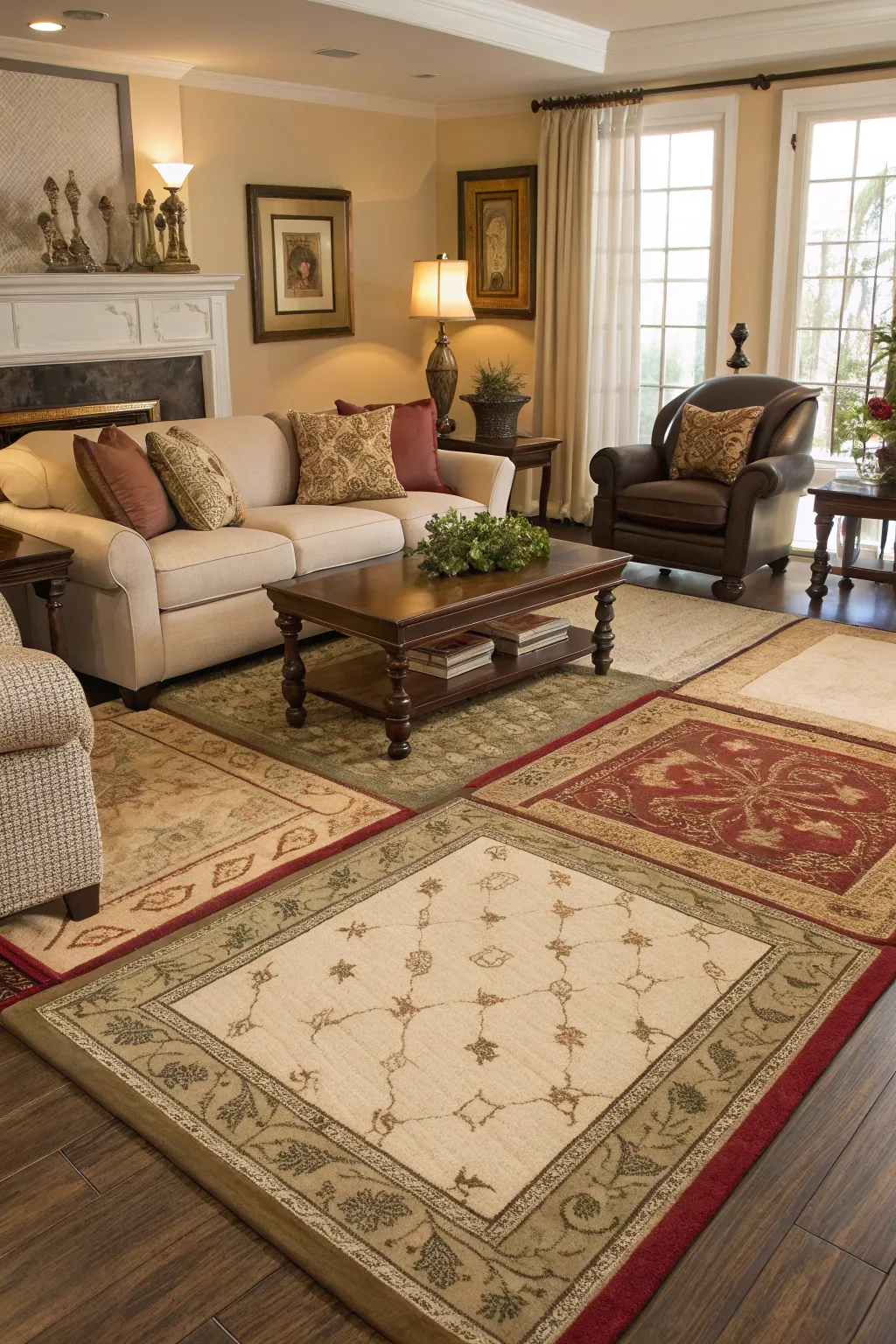
Tackling an oddly shaped living room can feel like a challenge, but with clever planning, any unusual area can become an inviting and snug space. Let’s uncover some innovative ideas to help you optimize your one-of-a-kind living room.
1. Optimize with Built-in Storage

Add built-in storage to keep the space tidy and functional. I love how this connects storage to the room’s design, enhancing both form and function.
2. Add Charm with Unique Nooks

Turn an unusual nook into a charming reading spot or display area. I’ve noticed that a cozy chair and a small bookshelf can turn a forgotten space into a beloved retreat. You can also explore these stylish designs for dining room corners to maximize your layout.
3. Revitalize Corners with Indoor Plants

Place indoor plants in challenging corners to breathe life and vibrancy into the area. I’ve seen how lush plants often turn an ignored area into a dynamic centerpiece.
4. Expand Visually with Decorative Items

Incorporate decorative items, such as mirrors and artwork, to visually expand the room. I’ve noticed that mirrors can make a space feel bigger, especially in tight corners.
5. Specify Spaces with Furniture Arrangement

Position furniture to define areas within an open floor plan. A strategic layout can make distinct areas for lounging, dining, and working, even in the most oddly shaped spaces. You can further enhance these zones by using creative paint ideas to visually separate each section.
6. Play with Ceiling Features

Draw the eye upward using decorative ceiling features like beams or creative lighting fixtures. These elements often add a surprising layer of style.
7. Unify with Color Schemes

A matching color scheme can connect different elements and make a harmonious look. I suggest choosing a palette that shows off both your style and balances the space. Explore our creative deck color scheme ideas to find the perfect match for your outdoor area.
8. Maximize Natural Lighting

Take advantage of natural lighting by opting for light, airy curtains that allow sunlight to brighten the room. I love this technique for enhancing the perceived size of an oddly shaped room. You can explore more brilliant lighting concepts to further elevate your space.
9. Incorporate Sliding Doors

Install sliding doors to save space and offer privacy without losing style. I find these work perfectly in open-concept areas where you want the option to close off certain spaces. Check out these unique ideas to cover sliding doors if you need more design inspiration.
10. Make Focus with Statement Pieces

Add a statement piece, like big artwork or unique furniture, to draw attention. In many designs, a standout piece becomes the room’s defining feature. You can also incorporate standout partition designs to create a focal point in contemporary homes.
11. Improve with Accent Walls

Use a bold color or pattern to make an accent wall that catches the eye and adds character. I’ve seen accent walls become the highlight of a previously unnoticed area. You can explore modern grey accent wall ideas to find the perfect look for your space.
12. Experiment with Asymmetrical Layouts

Consider an asymmetrical layout to break the norm and add visual intrigue. I’ve seen unconventional arrangements bring energy and creativity to a space.
13. Adopt the Sectional Sofa

A sectional sofa can completely change an awkward area, offering lots of seating while conforming to your room’s unique shape. At my place in Denver, a strategically positioned sectional turned a challenging corner into an inviting hangout. Be sure to pair your seating with the best coffee tables for sectional sofas to complete the look.
14. Go for Multifunctional Furniture

Multifunctional furniture, like ottomans or side tables that provide storage, can increase utility without making the room feel cluttered. I’ve realized that these items can easily adapt to various needs and layouts. You can incorporate these pieces into your smart craft storage room ideas to maximize your workspace.
15. Utilize Bookshelves and Cabinets

Fill long walls with bookshelves or cabinets to increase storage and create a visual anchor. I’ve seen that these pieces serve as both functional and decorative elements.
16. Harmonize with Accent Chairs and Lamps

Strategically position accent chairs and lamps to balance the room and provide more seating. I’ve realized that a well-placed accent chair can significantly change the dynamic of a space.
17. Add Depth with Textural Variety

Combine different textures to make separate room sections feel deeper and more interesting. I’ve always thought that combining materials like wood, fabric, and metal enriches any layout.
18. Transform with Floating Shelves

Install floating shelves to use vertical space and display your favorite items without taking up floor space. I’ve used this to stylishly showcase art and plants in narrow areas. Explore our guide on modern floating shelves to find the perfect fit for your home.
19. Make Flow with Open Pathways

Make sure there are open pathways to allow for easy movement. I’ve discovered that thoughtful furniture placement can make even a small room feel accessible and welcoming.
20. Enhance with Wall-Mounted TVs

Free up valuable floor space and draw the eye upward by installing your TV on the wall. I’ve noticed this is particularly helpful in rooms where space is limited, allowing for more versatile furniture layouts. Explore our chic TV wall concepts to elevate your living area design.
21. Specify Areas with Area Rugs

Use area rugs to mark off separate areas in your living room, visually dividing the space without using walls. Personally, I’ve seen rugs beautifully distinguish seating from a reading spot. This technique is especially effective when blending living room and kitchen spaces.