
Crafting a minimalist home goes beyond just decluttering; it’s about designing a tranquil environment that brings peace. Let’s uncover some inventive and practical minimalist design concepts to transform your home into a serene haven.
Introduce Geometric Patterns

Simple geometric patterns can add interest without being overwhelming. A geometric rug in my study adds a touch of flair while keeping the design understated. These elements are a staple in our creative room ideas for the contemporary man.
Introduce Wood Tones

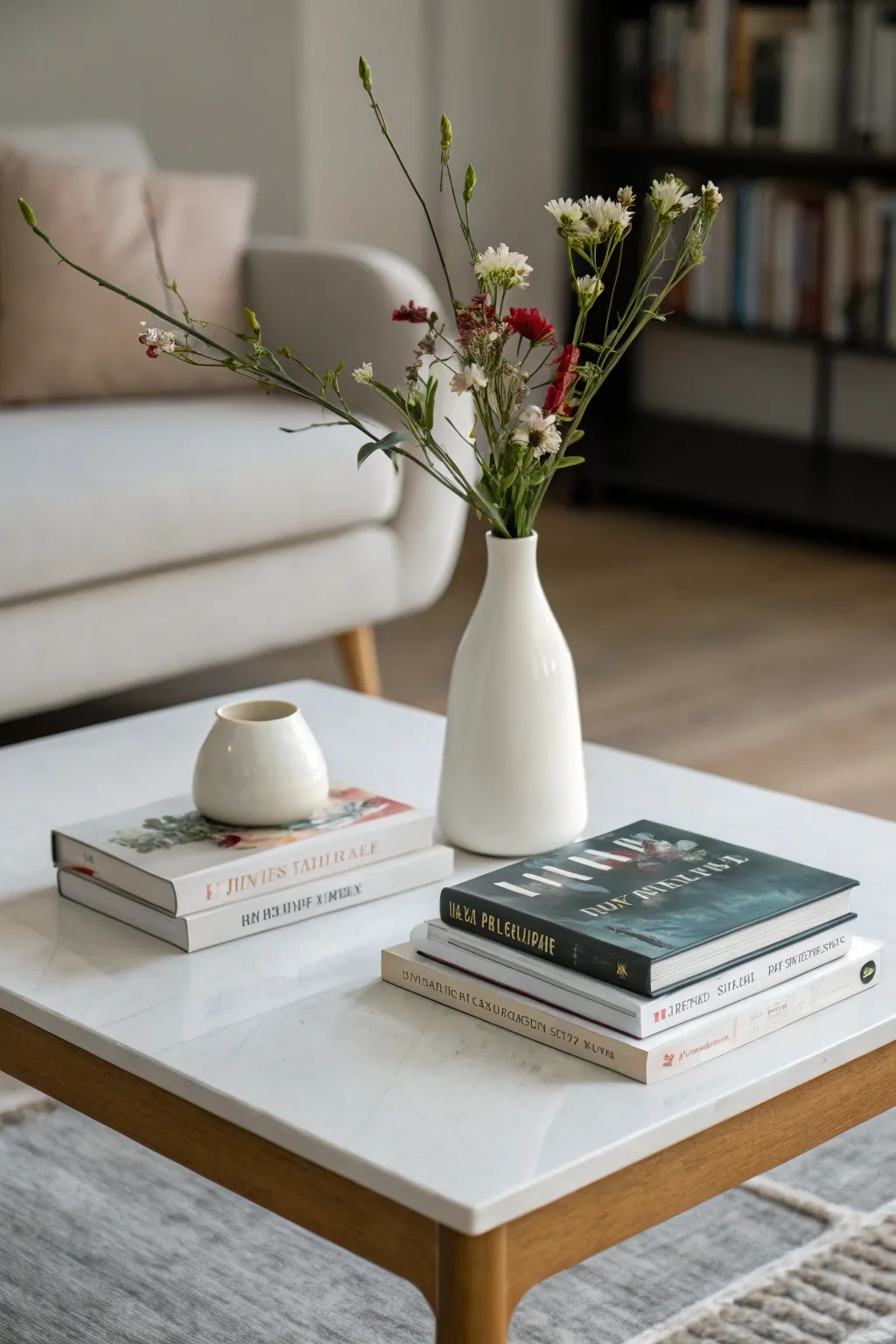
Light or natural wood features can bring warmth to a minimalist room. I love how my wood coffee table anchors the living space elegantly.
Opt for Hidden Storage

Keep things tidy with hidden storage solutions. My ottoman doubles as a storage space, keeping extra blankets neatly tucked away. You can also explore innovative duvet storage to maximize your closet space.
Incorporate Botanicals

Introducing a few plants can infuse vibrancy and color into a minimalist space. In my living room, a solitary potted plant makes a significant difference. You can also explore minimalist rose centerpiece inspirations to add a refined floral touch.
Create a Minimalist Gallery

Assemble a small gallery with similar frames to create a cohesive look. My collection of black and white photos adds a personal touch without clutter. You can find more inspiration in our modern black and white bedroom concepts.
Integrate Technology Discreetly

Keep technology hidden or integrated to maintain a clean look. In my living room, the TV is mounted flush against the wall, minimizing its presence. Explore modern living room TV designs to help your electronics blend seamlessly into your home decor.
Amplify Natural Illumination

Expansive windows and diaphanous curtains help saturate a room with natural light, imparting a sense of spaciousness and airiness. In my own home, I’ve witnessed how this straightforward adjustment can rejuvenate the entire area. Explore our stylish window coverings for expansive windows to enhance your space.
Utilize Clear Elements

Incorporate clear materials like glass to keep things light and airy. My glass-top dining table adds sophistication without visual weight. You can also explore top dining table stain colors to further transform your space.
Experiment with Composition

Employ compositions like inviting rugs and throws to introduce warmth without overcrowding. In my brownstone, a textured throw on the couch elevates the room’s comfort.
Highlight a Focal Point

Let one statement piece shine as the focal point. My oversized floor lamp is both a functional and eye-catching addition.
Use Mirrors to Expand Space

Mirrors can amplify the sense of space and light. In my hallway, a large mirror not only reflects light but also makes the area feel larger. You can find more ways to enhance your home in our innovative modern entryway design guide.
Choose Functional Design

Select items that are both decorative and useful. For instance, my stylish storage baskets keep clutter out of sight while adding to the room’s appeal.
Choose Streamlined Furniture

Select furniture featuring smooth edges and a simplistic design to maintain a polished appearance. My vintage-inspired chair is a beloved piece that adds flair without dominating the space.
Experiment with Open Space

Embrace open space to let design elements breathe. In my gallery wall, I leave ample space around each frame for a striking impact. Check out these gallery wall TV ideas to see how to balance your screen with art.
Select Minimalist Illumination

Choose simple lighting fixtures that blend seamlessly into your design. My sleek pendant lights provide illumination without distraction. Explore our creative lighting fixtures for master bedrooms to find the perfect minimalist glow.
Select Minimalist Wall Decor

Go for understated or abstract art to maintain a serene atmosphere. A single monochrome piece in my hallway harmonizes the entire area beautifully.
Maintain Open Spaces

Keep areas free of clutter to emphasize spaciousness. In my home, less is more, and it truly feels liberating.
Embrace Neutral Tones

Neutral hues like ivory, ecru, and gentle grays serve as the bedrock of minimalist aesthetics. In my Boston apartment, I’ve discovered that these shades create a serene canvas, making the area feel more expansive and welcoming.
Personalize with Minimalist Touches

Add personality with carefully selected minimalist accessories. A few cherished books and a simple vase on my coffee table perfectly reflect my style. Follow our expert tips for styling your coffee table to complete the look.