
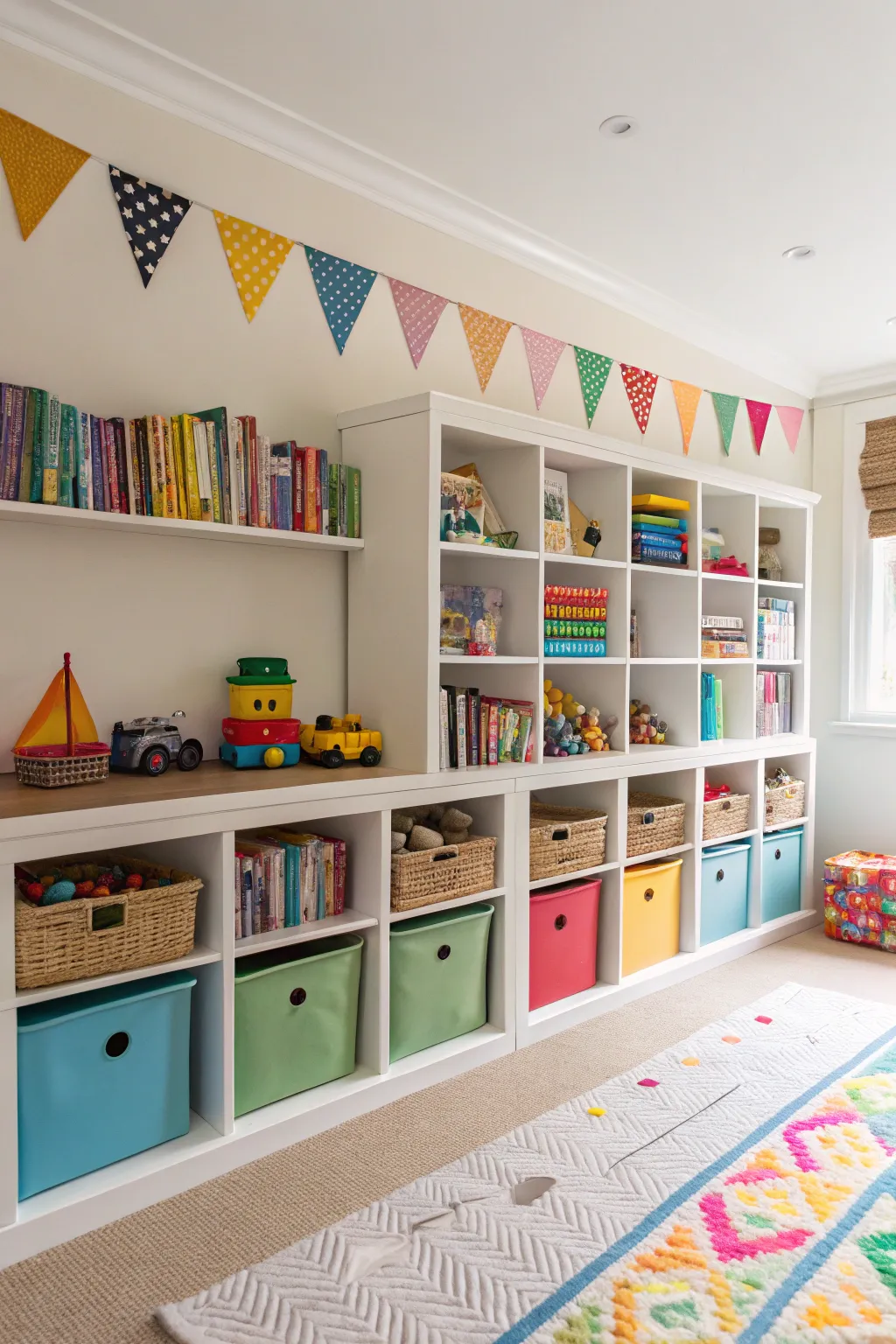
As a parent, I’ve seen firsthand how a chaotic playroom can quickly turn into a source of stress. Yet, with thoughtful organization, this space can become a wonderland of creativity and joy for your children.
Toy Rotation for Freshness

Implement a toy rotation system to keep the playroom environment fresh and engaging. From my experience, this keeps children excited about their toys as if they’re new each time. You can find more inspiration for your space in our toddler playroom ideas guide.
Child-Sized Furniture for Comfort

Opt for child-sized furniture to make the playroom more inviting and functional for little ones. In my projects, this has consistently promoted a sense of independence and comfort. You can explore inspiring couch ideas to further transform your playroom.
Dress-up Corner with Hooks

Create a dress-up corner using wall hooks to hang costumes and accessories. I’ve seen this setup ignite imaginative play in countless playrooms. Check out these inspiring dress-up corner ideas to spark creativity.
Create Dedicated Play Zones

Define specific areas for different activities, such as an art corner or a reading nook, which helps in keeping the playroom orderly. From my experience, this strategy not only organizes but also encourages focused play. You can explore more ideas in our guide to stylish living room and playroom combo designs.
Clear Storage Solutions

Utilize clear storage bins to make it easy for children to find and return toys. In my designs, these have become essential for maintaining an organized and user-friendly space. Explore our modern playroom storage design concepts to further streamline your layout.
Display Books on Floating Shelves

Use floating shelves to display books with covers facing out, encouraging independent reading. In my designs, this approach has successfully drawn children to books like magnets.
Foam Flooring for Safety

Consider foam flooring, which is soft for play and easy to clean, providing a safe environment for energetic little ones. I’ve used it in many playrooms to great effect. Explore more fun and practical playroom floor ideas to complete your space.
Create a Quiet Reading Corner

Establish a cozy reading corner with soft seating and good lighting to foster a love for books. These nooks have become treasured spaces in the playrooms I’ve designed.
Underutilized Space Hacks

Make use of underutilized spaces, like the area under tables or corners, for additional storage. It’s a trick I’ve used to maximize every inch of a playroom efficiently. Check out these creative storage ideas to help you organize your home.
Incorporate Natural Light

Maximize natural light in the playroom to create a bright and inviting atmosphere. In my experience, a well-lit space enhances the mood and energy levels for play. You can explore innovative playroom office combo solutions to make the most of your available square footage.
Baskets and Bins for Clutter Control

Use assorted baskets and bins to store toys, making it simple for children to tidy up after playtime. In my home, labeled bins have transformed the playroom from chaos to calm. You can also enhance the space with innovative playroom curtain designs to match your chosen theme.
Multi-purpose Furniture

Incorporate multi-purpose furniture like storage benches that double as play surfaces for efficient use of space. I’ve found these pieces invaluable in maximizing both function and play areas. You can also explore creative crawl space storage designs to further optimize your home layout.
Sensory Play Area

Designate a space for sensory play, incorporating textures and interactive elements. This area becomes a favorite in playrooms I’ve designed, providing endless tactile exploration.
Repurpose Old Furniture

Upcycle old furniture pieces for unique storage solutions, saving money and adding character. I’ve transformed many a vintage piece into a playroom favorite. You can also explore smart storage solutions for organizing shoes to maximize your space.
Color Coordination for Cohesion

Incorporate color coordination to create a visually pleasing and cohesive playroom. Personally, I love how vibrant colors bring energy to a space while subtly guiding organization.
Use of Vertical Storage

Vertical storage solutions can save floor space while keeping items easily accessible. In smaller playrooms I’ve designed, this trick has been a lifesaver. You can also implement smart vinyl roll organization to keep your craft supplies tidy.
Hang Art for a Personal Touch

Display your child’s artwork to add a personal and colorful touch to the playroom walls. In my designs, this not only personalizes the space but also celebrates creativity.
Interactive Wall Decor

Engage your child’s creativity with interactive wall decor and educational posters. I’ve seen how these elements can transform a plain wall into an inspiring feature of the playroom.
Personalized Play Mats

Use personalized play mats to define play areas and add a touch of individuality. I’ve found these mats to be both practical and endearing in any playroom, especially when paired with imaginative paint schemes.
Open Shelving for Easy Access

Open shelving units are a game-changer in playroom organization, allowing toys and books to be displayed neatly while remaining easily accessible. In my designs, I’ve found that when kids can see their toys, they’re more likely to engage with them.