
Dealing with small rooms opens a world of exciting design opportunities, filled with chances to get creative. Here, I’m eager to share my top strategies for turning these compact areas into welcoming and practical retreats.
1. Delve into Versatile Furnishings

Versatile pieces are truly transformative in smaller homes. Think of a sofa that turns into a bed, or a dining table that can also serve as a workstation – these additions significantly boost your room’s functionality. From my experience, they’re vital for striking the right chord between practicality and beauty.
2. Utilize Fixed Furnishings

Incorporating built-in furniture can help streamline a room and unlock more usable space. I’ve seen how this approach can transform even the tightest spaces with seamless storage solutions.
3. Work with Upward Lines

Vertical lines, such as tall bookcases or striped wallpaper, can make a room feel taller. I’ve often used these to draw the eye upwards, creating the illusion of increased height and space. You can apply these same principles of verticality when designing smart 4×6 shower layouts to maximize your available square footage.
4. Create Dedicated Zones

Designating specific areas for different activities within a small room can truly maximize its utility. I’ve designed spaces that smoothly transition from being a workspace to a place of relaxation with ease. You can explore our best layouts for small rooms to help define these zones effectively.
5. Incorporate Accent Illumination

Using accent lighting such as wall sconces or pendant lights introduces warmth and character without taking up any floor area. This is one of my favorite strategies for enhancing a room’s ambiance.
6. Opt for Sliding or Pocket Doors

Swapping out traditional doors for sliding or pocket doors is a fantastic way to save space. It’s a clever trick that I’ve often used to improve spatial flow and enhance room functionality. You can find more clever ideas for small closets to further optimize your storage.
7. Implement Harmonious Color Palettes

A unified color scheme can visually link a small space, making it feel more expansive. I often opt for colors that complement each other to create a seamless and harmonious flow.
8. Maximize Sunlight and Reflection

Using reflective surfaces such as mirrors can greatly enhance natural light, making a room seem larger. I’ve found it especially effective to place mirrors opposite windows to amplify the effect. For more guidance, check out our tips on the best spots to place mirrors in your bedroom.
9. Think Outside the Box with Bed Placement

Positioning the bed in unexpected places, like within alcoves, can really optimize the layout of a room. This clever trick often amazes my clients by how much additional space it can create.
10. Strategically Add Greenery

Introducing a little greenery can breathe life into a small space. Something as simple as a small plant on a shelf or a hanging plant near a window can make a huge difference. Follow our expert tips for styling your plant shelves to create a balanced look.
11. Embrace a Less-Is-More Approach

Keeping your decor minimal can prevent a small room from feeling crowded. I always aim for simplicity, ensuring that each item has a purpose and adds value without overwhelming the space. You can also explore clever TV solutions to maximize your layout.
12. Add Personal Flourishes

Adding personal touches like custom art or unique décor pieces can truly make a small space feel like home. I always encourage clients to include items that reflect their personality and passions. Check out these trendy teenage room ideas for more inspiration on how to showcase individual style.
13. Use Elevated Furnishings

Floating furniture, like wall-mounted desks or nightstands, creates extra floor space and opens up the room. I’ve used this to great effect to create spaces that are functional and clutter-free. You can apply this same modern wall-mounted design approach to your entertainment area.
14. Mix Textiles and Layers

Layering textiles—like throws and cushions—adds depth and visual comfort. I often layer rugs to help define different zones within the same room, adding both texture and functionality.
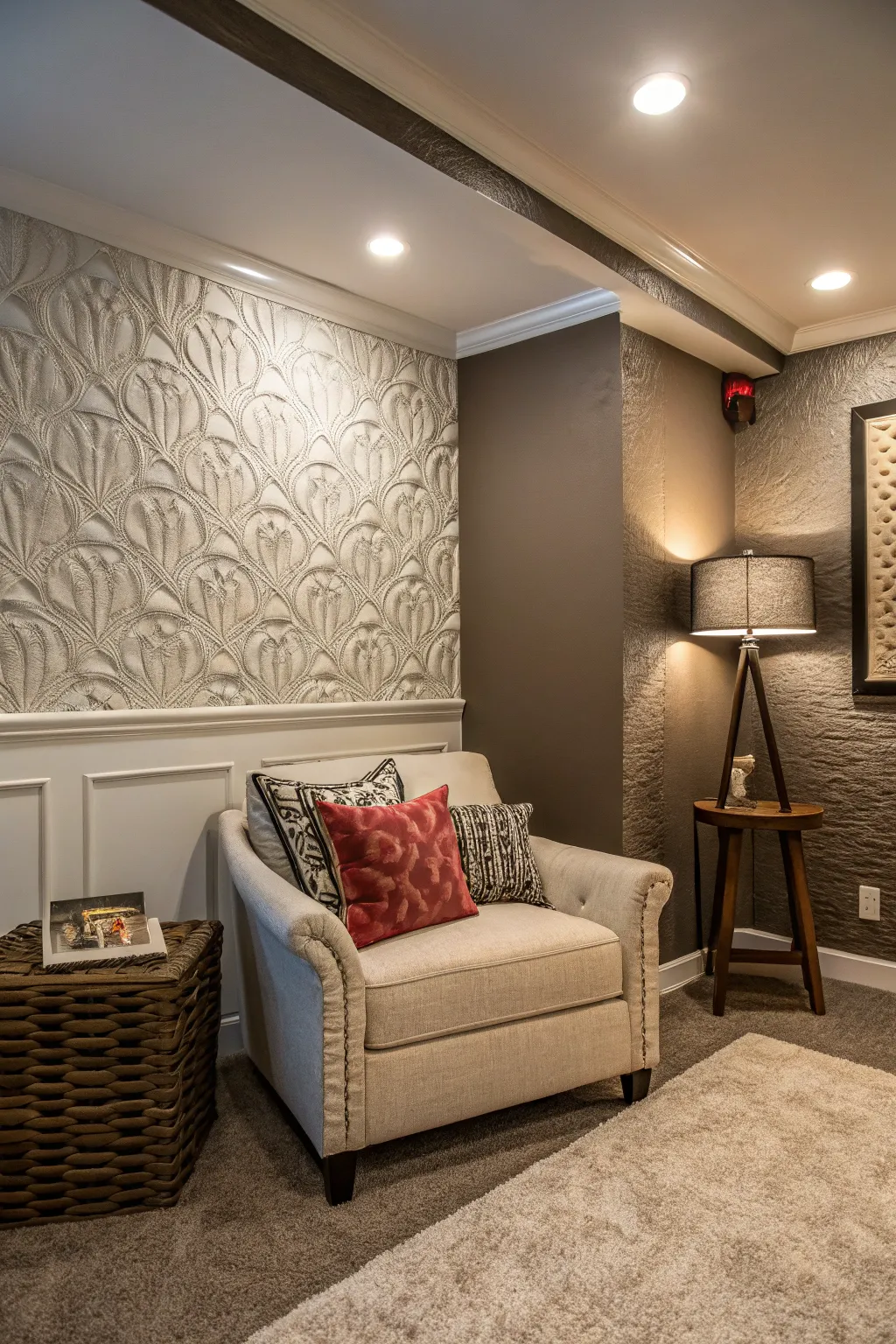
15. Create Dimension with Feature Walls and Textures

Feature walls or textured surfaces can truly enhance the depth of a room without adding clutter. I’m particularly drawn to using subtle patterns or striking wallpaper to capture attention and inject character. These elements work best when integrated into smart modern bathroom layouts.