
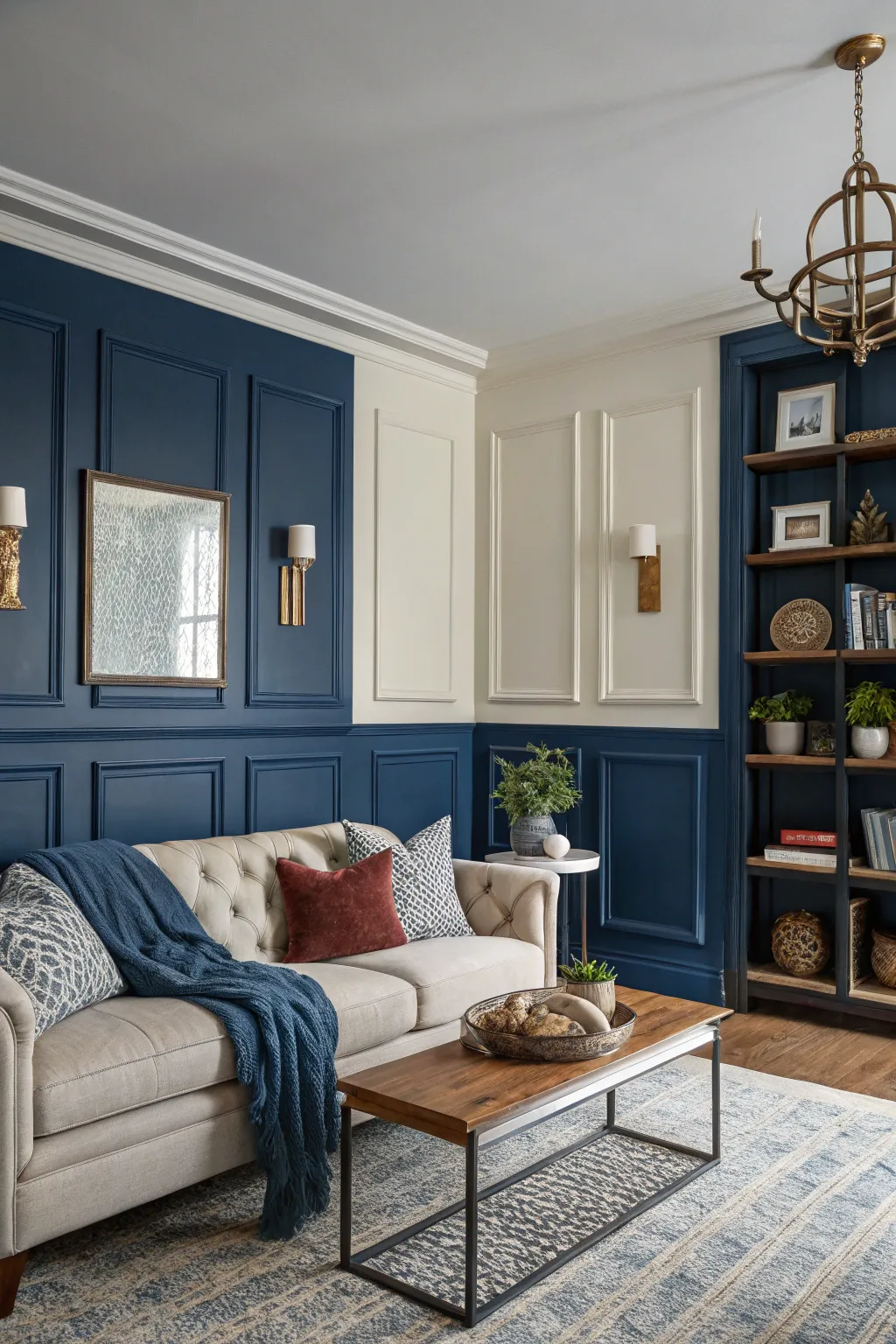
Introducing half wall paneling, a clever technique to instill character and richness into your abode, harmonizing visual allure with everyday practicality. Whether your heart sways towards timeless grace or contemporary sleekness, you’re sure to find a half wall paneling concept that resonates with your personal aesthetic.
1. Country-Style Repurposed Wood

For a hint of countryside charm, reclaimed wood paneling remains unparalleled. I once converted a plain hall into an inviting pathway, utilizing timeworn wood that appeared to narrate its unique tale.
2. Whimsical Geometric Forms

Showcase your fun personality by employing geometric designs for your panels. I once put together a children’s room with hexagonal panels, each featuring a different pastel color for a lively and cheerful atmosphere.
3. Enchanting Beadboard

Beadboard paneling enriches any space with captivating nuances through its slender, upright planks. It stands out as a top pick for kitchens, harmonizing beautifully alongside both classic and today’s designs. You can also explore creative paneling ideas to bring this charming look into your entryway.
4. Grooved Style for Texture

Fluted panels are an excellent way to incorporate complex texture in any space. In a recent assignment, I installed these as an elegant backdrop behind a dining room sideboard. This design choice works perfectly when considering the best dining room layouts for your home.
5. Painted Boards with Strong Designs

Express your inventive side using painted panels in eye-catching designs. One example that comes to mind involves painting a chevron pattern with contrasting shades, instantly becoming the room’s highlight. You can explore more eye-catching designs for front porch railings to find additional inspiration for your home.
6. Elegant Mirrors

Mirrored panels offer a way to make a room feel grander and more opulent. Position them thoughtfully to bounce light, giving a hint of sophistication, similar to how I transformed a confined entryway into one that welcomes and feels expansive.
7. Combined Shelving

Merge paneling with integrated shelves for enhanced practicality. Recently, I put this concept to use within a study where the shelves were intended for books and ornamental items, efficiently optimizing the available area.
8. Textured Medium Density Fiberboard Boards

MDF boards with textures present a modern variation because of their polished, sensory surfaces. I am drawn to using these in minimalist schemes to introduce subtle intrigue without overpowering the look of simplicity. You can also incorporate these textures into your modern window trim design to elevate the architectural details of your home.
9. Striking Contrasts Through Deep Wood

Dark wood paneling has the ability to create impressive contrasts, contributing both drama and elegance. I applied this in a modern sitting room where dark panels wonderfully framed furniture in lighter tones. Explore these stylish wood paneling designs to elevate your own interior space.
10. Up-to-date Shiplap Paneling

Shiplap evokes a snug, farmhouse ambiance that is both inviting and pleasant. I consider it an ideal choice for infusing a relaxed feel into bedrooms, particularly when coated in gentle, muted colors. You can also incorporate this look into your living area with these charming farmhouse shiplap fireplace ideas.
11. Ornamental Artwork Rails

Put up a picture rail above your paneling to show off art or images. I favor this solution in hallways, providing a chance to easily rotate artwork and personal photos.
12. Zigzag Designs

Chevron patterns inject a contemporary sense of style into any area. I particularly find these work well in hallways, where the zigzag lines naturally lead the eye through the area. Explore more inspiring ways to use chevron tiles to elevate your home design.
13. Covering Over Boards

Think about merging wallpaper with paneling to create a multi-layered look. I once matched floral wallpaper alongside white panels in a bedroom, yielding a tranquil and heartfelt setting.
14. Creative Vertical Strips

Vertical planks have the power to imply additional height, making them perfect for spaces with limited ceiling clearance. I’ve previously used this method in a compact study to naturally draw eyes upward, therefore, enhancing a feeling of more space.
15. Weathered Wood for Timeless Appeal

Distressed wood introduces vintage charm and comfort. I incorporated this material in a living room to highlight classic furniture, producing a setting that evokes a feeling of nostalgia while still being warm and welcoming. Explore more elegant living room designs with wood floors to complete your space.
16. Timeless Wainscoting

Classic wainscoting is an everlasting selection for individuals with an appreciation for conventional elegance. I’ve frequently incorporated it into dining spaces to inject a dash of sophistication, choosing a white hue to achieve a stunning juxtaposition against darker shades on the upper portions of the walls. For a warmer aesthetic, explore these cozy rustic wainscoting designs that highlight natural wood textures.
17. Dual-Tone Paneling

Exploring two-tone paneling opens the door to striking contrast in any setting. I’m particularly fond of utilizing strong hues, such as a deep navy, for the lower segment, paired with a pristine white above, creating a captivating visual statement. You can find more inspiration in our guide to chic two-tone paint ideas.